Caster question

Unitize

New Member
Joined
Dec 26, 2024
Messages
9
Location
WV
Hi all,

I’ll preface this by saying I’m not the most mechanically inclined and learning as I go. I recently installed the Rancho geometry brackets on my 2014 Jeep JK that has a 4 inch lift. I was having issues with the Jeep being flighty and steering not returning to center and this seemed to be the best option for my budget. Once I installed the brackets I was getting a harsh driveline vibration so I removed the front driveshaft and that seemed to be the culprit (both driveshafts and all control arms are stock, I plan to upgrade once it’s in the budget). I was still getting a slight flighty feeling but the steering does return the center a lot better now, so I’m trying to figure out my caster. I’ve provided the measurements below but I’m still unsure what to make of them or if I’m even measuring from the right spots. Any tips or suggestions would be much appreciated, even constructive criticism. Thanks!
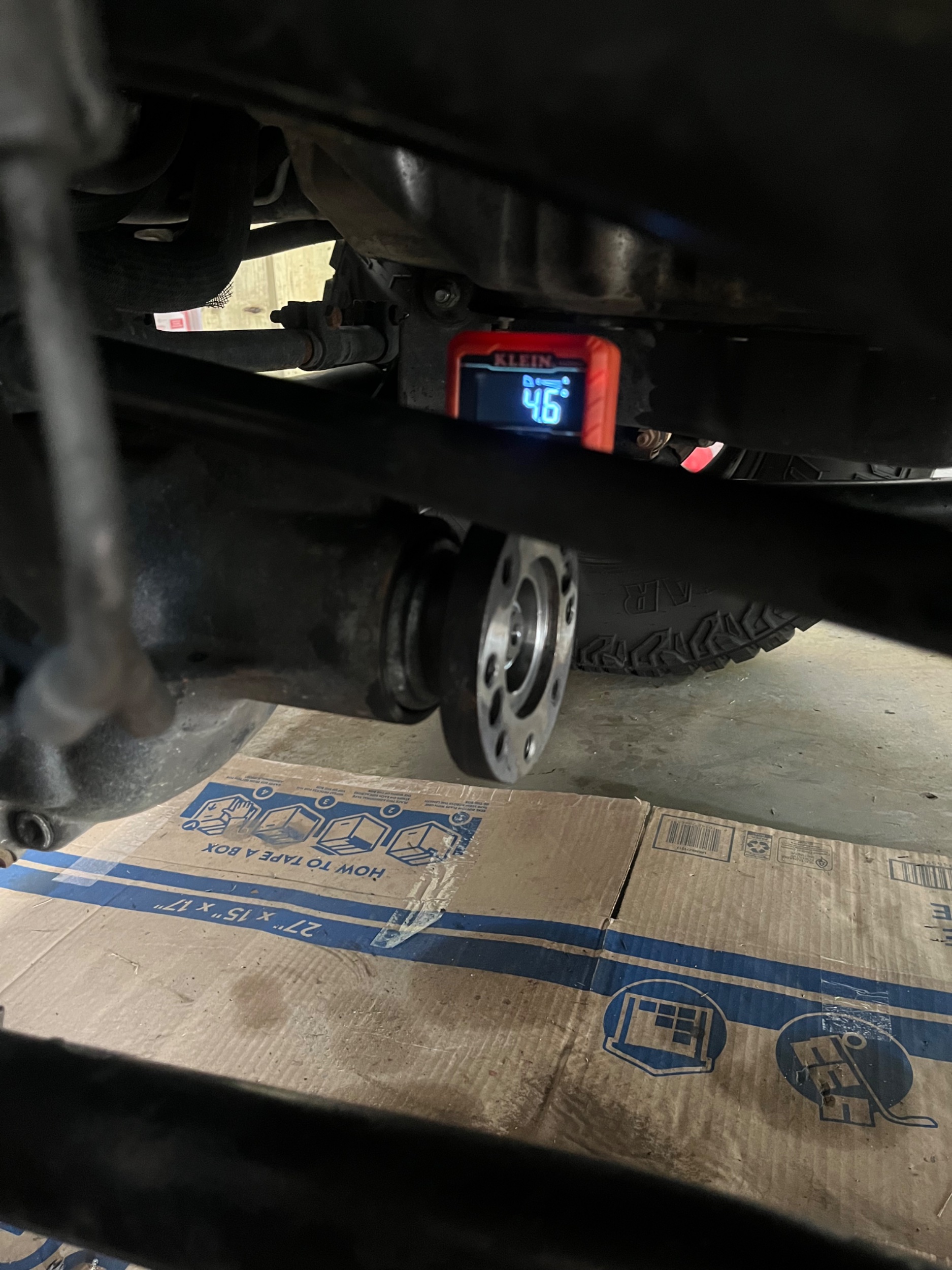
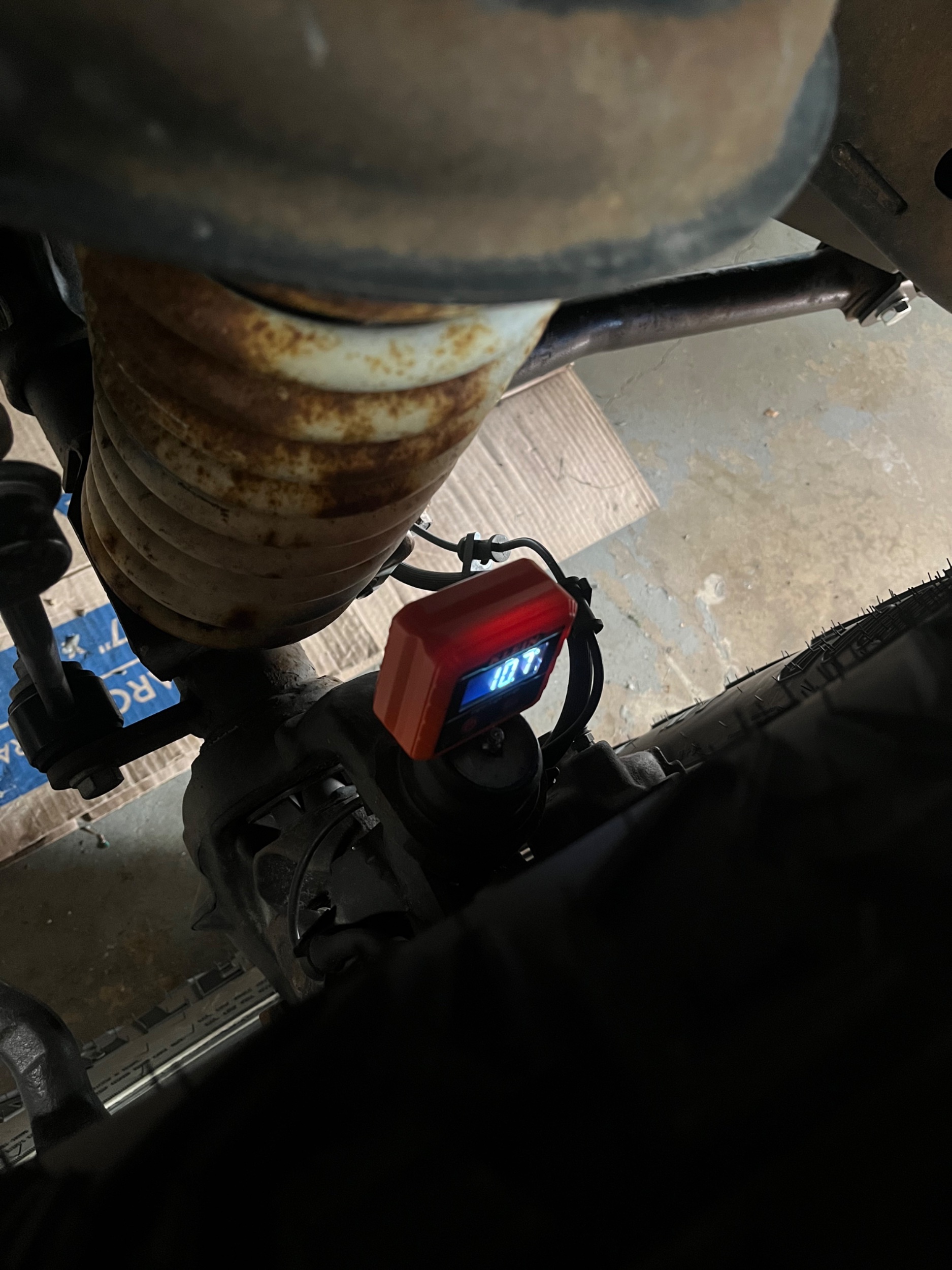
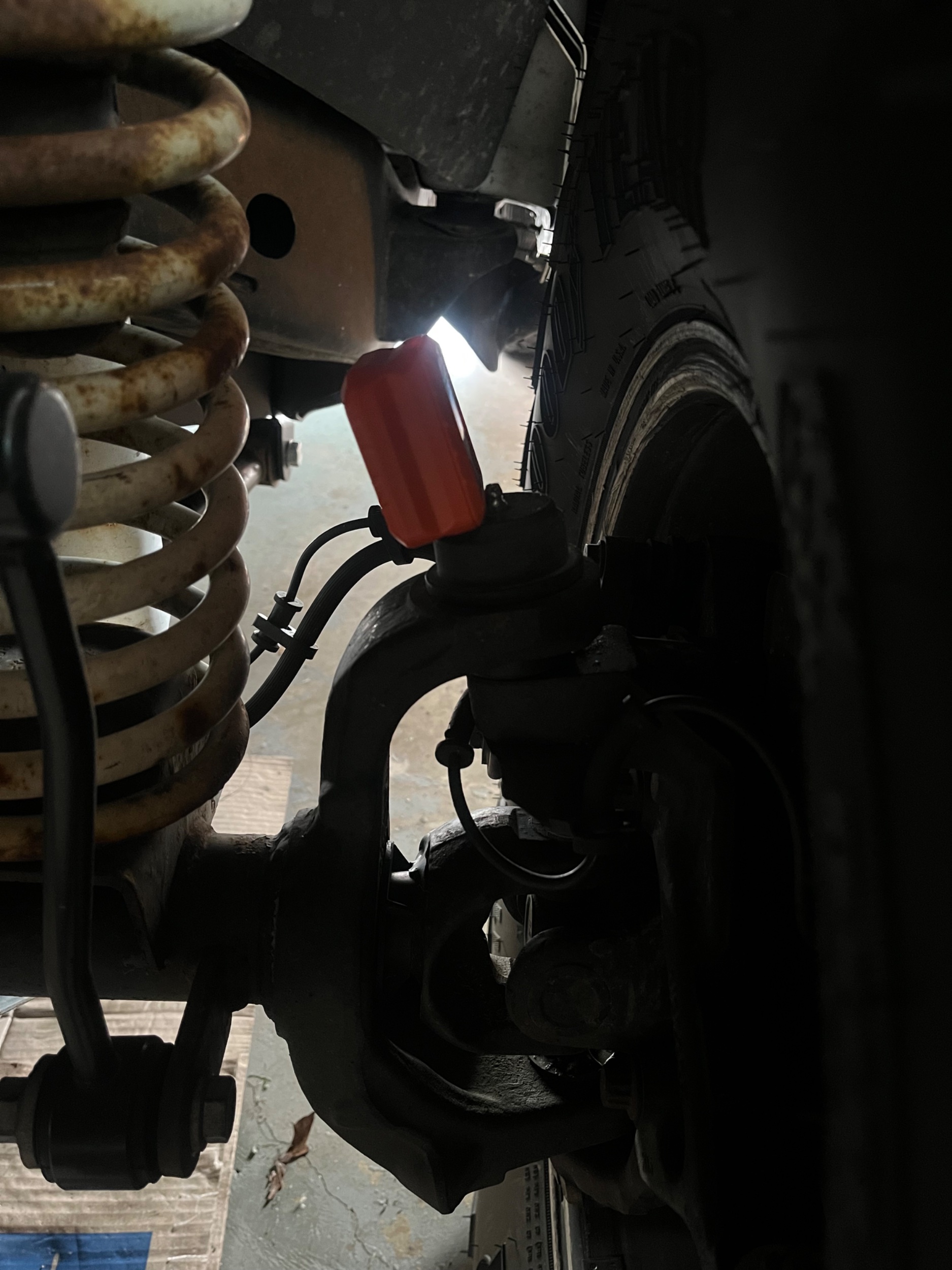
IMG_6565.jpeg
IMG_6568.jpeg
IMG_6567.jpeg
 
Hi all,

I’ll preface this by saying I’m not the most mechanically inclined and learning as I go. I recently installed the Rancho geometry brackets on my 2014 Jeep JK that has a 4 inch lift. I was having issues with the Jeep being flighty and steering not returning to center and this seemed to be the best option for my budget. Once I installed the brackets I was getting a harsh driveline vibration so I removed the front driveshaft and that seemed to be the culprit (both driveshafts and all control arms are stock, I plan to upgrade once it’s in the budget). I was still getting a slight flighty feeling but the steering does return the center a lot better now, so I’m trying to figure out my caster. I’ve provided the measurements below but I’m still unsure what to make of them or if I’m even measuring from the right spots. Any tips or suggestions would be much appreciated, even constructive criticism. Thanks!


View attachment 131087View attachment 131088View attachment 131089

Do I see a caster angle of 10.1 or 10.7? If so, that’s crazy! That’s definitely affecting your driveline vibrations.

Get rid of the geometry brackets. Get adjustable lower control arms at a minimum. With a 4 inch lift you might need upper control arms too but you definitely need lowers.

Once you have adjustable lowers, get your caster angle to 5 degrees and go from there. I doubt I’d go above 6 degrees but run some tests till you are happy.

With a 4 inch lift you also need a new driveshaft. You could try a high angle Rzeppa joint but I would not. You need a double cardan joint driveshaft with that much lift.

Lifting a Jeep PROPERLY costs some money. You don’t have to spend thousands but you do need to prepare to spend in the vicinity of $1000 to get it right. How’s your axle alignment? Do you have an adjustable front track bar? What about the rear? You might look at maxpeedingrods control arms. I’m testing some right now. You can save a little money but I don’t know how the long term durability will be but they do seem to be well made. We’ll see
 
Last edited:
Do I see a caster angle of 10.1 or 10.7? If so, that’s crazy! That’s definitely affecting your driveline vibrations.

Get rid of the geometry brackets. Get adjustable lower control arms at a minimum. With a 4 inch lift you might need upper control arms too but you definitely need lowers.

Once you have adjustable lowers, get your caster angle to 5 degrees and go from there. I doubt I’d go above 6 degrees but run some tests till you are happy.

With a 4 inch lift you also need a new driveshaft. You could try a high angle Rzeppa joint but I would not. You need a double cardan joint driveshaft with that much lift.

Lifting a Jeep PROPERLY costs some money. You don’t have to spend thousands but you do need to prepare to spend in the vicinity of $1000 to get it right. How’s your axle alignment? Do you have an adjustable front track bar? What about the rear? You might look at maxpeedingrods control arms. I’m testing some right now. You can save a little money but I don’t know how the long term durability will be but they do seem to be well made. We’ll see

Thank you for the feedback, I’ll definitely look at getting some adjustable control arms and the driveshaft is next on my list. I inherited this Jeep so I’m still finding things wrong as I go and trying to save up to get the proper parts. I also discovered yesterday that while the list I got with the Jeep said it was a 4 inch lift, it’s actually a 3. I moved the upper arms to the 3 inch slot and reattached the front driveshaft and the vibrations are gone. I remeasured the caster from where I understand you’re supposed to measure from and it’s still reading right around 10.7-11.3 depending on exactly where I place the angle finder. I was under the impression that you were supposed to subtract 6 front that with factory equipment so it would be 4.7-5.3, is that incorrect?

It does actually have an adjustable track bar, I’ll get back to you on the axel alignment and everything in the rear appears to still be stock. Thanks again!
 
I remeasured the caster from where I understand you’re supposed to measure from and it’s still reading right around 10.7-11.3 depending on exactly where I place the angle finder. I was under the impression that you were supposed to subtract 6 front that with factory equipment so it would be 4.7-5.3, is that incorrect?
1MTBWA.jpg


Caster is measured against true vertical. Assuming your angle finder was zero'ed out appropriately, it's very likely the cause of your vibrations. On a JK, caster angle and pinion angle share a fixed, inverse relationship. This is because the inner "C"s and differential housing are welded together as one solid unit. When you rotating the pinion up to reduce driveline vibrations, simultaneously reduces your caster, and vice versa. There is about a +6° difference between pinion and caster angles, and your measurements show this to be accurate for your axle. What this means is that you can estimate caster based off of pinion angle. Example: if you measure pinion angle to be 1º (how you measured it at least), you know that with +6°, you have ~7° of caster.

The best way to determine the "sweet spot" is to set your pinion angle to where it should be fine, and then confirm caster. You can generally go down to ~4°, though closer to 5°-5.5° is generally best for drivability. The larger the tire size you're running, the closer to 4° you can get away with.

It looks like you have aftermarket lower control arms already. These are usually longer (esp those meant for 4" lifts) to help with centering the axle and keeping caster in check. With the geometry brackets, they're too long, leading to your excessive caster measurement. You will likely want to go with adjustable lower control arms (and if you plan on keeping the 4" springs, adjustable uppers as well), though the geometry brackets are good if you don't mind how low they hang as they help with control arm angles.
 
Thank you for the feedback, I’ll definitely look at getting some adjustable control arms and the driveshaft is next on my list. I inherited this Jeep so I’m still finding things wrong as I go and trying to save up to get the proper parts. I also discovered yesterday that while the list I got with the Jeep said it was a 4 inch lift, it’s actually a 3. I moved the upper arms to the 3 inch slot and reattached the front driveshaft and the vibrations are gone. I remeasured the caster from where I understand you’re supposed to measure from and it’s still reading right around 10.7-11.3 depending on exactly where I place the angle finder. I was under the impression that you were supposed to subtract 6 front that with factory equipment so it would be 4.7-5.3, is that incorrect?

It does actually have an adjustable track bar, I’ll get back to you on the axel alignment and everything in the rear appears to still be stock. Thanks again!

I have a 3.5 inch lift (actual measurement is closer to 3 inches) and it was on it when I bought it. It had a few things wrong with it as well when I bought it. They are all fixed now and it rides really well.

If you don’t have at least a track bar relocation bracket for the back axle or an adjustable rear track bar, the rear axle will not be centered. I’d get it back to where it should be….centered under the Jeep. Then, align the front to the rear.

I have 5* of caster measured at the ball joint and it drives and steers great.
 
  • Like
Reactions: Unitize
View attachment 131090

Caster is measured against true vertical. Assuming your angle finder was zero'ed out appropriately, it's very likely the cause of your vibrations. On a JK, caster angle and pinion angle share a fixed, inverse relationship. This is because the inner "C"s and differential housing are welded together as one solid unit. When you rotating the pinion up to reduce driveline vibrations, simultaneously reduces your caster, and vice versa. There is about a +6° difference between pinion and caster angles, and your measurements show this to be accurate for your axle. What this means is that you can estimate caster based off of pinion angle. Example: if you measure pinion angle to be 1º (how you measured it at least), you know that with +6°, you have ~7° of caster.

The best way to determine the "sweet spot" is to set your pinion angle to where it should be fine, and then confirm caster. You can generally go down to ~4°, though closer to 5°-5.5° is generally best for drivability. The larger the tire size you're running, the closer to 4° you can get away with.

It looks like you have aftermarket lower control arms already. These are usually longer (esp those meant for 4" lifts) to help with centering the axle and keeping caster in check. With the geometry brackets, they're too long, leading to your excessive caster measurement. You will likely want to go with adjustable lower control arms (and if you plan on keeping the 4" springs, adjustable uppers as well), though the geometry brackets are good if you don't mind how low they hang as they help with control arm angles.

I think I’m understanding more what you’re saying. I apologize as I’m still pretty new to this, so the difference between the measurement on the ball joints and the flange (10.7 to 4.6) is what my caster is? I can definitely look into getting adjustable lower control arms, in the meantime with this brackets I’m able to move the upper arms into different positions using the pre-designated holes. If I were to move the upper arms up one slot rotating the axel forward would that help the caster angle?
 
I think I’m understanding more what you’re saying. I apologize as I’m still pretty new to this, so the difference between the measurement on the ball joints and the flange (10.7 to 4.6) is what my caster is? I can definitely look into getting adjustable lower control arms, in the meantime with this brackets I’m able to move the upper arms into different positions using the pre-designated holes. If I were to move the upper arms up one slot rotating the axel forward would that help the caster angle?

We are guessing. We really don’t know since we aren’t there to make measurements and check things. We don’t know the measurements of your aftermarket lower control arms. I thought they were OE but after looking at the pic closer, I agree they are aftermarket. But since they aren’t adjustable, we don’t know what you have on there. Get rid of the brackets. Get adjustable lower control arms. Make adjustments and dial everything in.

Lifting vehicles isn’t cheap. But doing it wrong is even more expensive when you start breaking stuff.
 
  • Like
Reactions: Unitize
I think I’m understanding more what you’re saying. I apologize as I’m still pretty new to this, so the difference between the measurement on the ball joints and the flange (10.7 to 4.6) is what my caster is?

No - your caster angle is the difference between true 0° and imaginary line that runs through your balljoints centerline when viewed from the side. Assuming that your Jeep is on level ground, you can reference the ground to "zero out" your angle finder, then put the same finder on top of the knuckle/balljoint (assuming it's also flat) to approximate your caster angle.

caster_diagram.jpg


The difference between the measurement on the ball joints and the flange (10.7 to 4.6) is simply the natural angle separation between the two. If you know this info, you can more easily (possible) measure the one by using the other. Example: say you've installed your axle and wheels/tires, but you're now unable to put an angle finder on the balljoint. If you know that the pinion measurement you were making is 6° difference, you can just measure that angle and then do some quick math.

I can definitely look into getting adjustable lower control arms, in the meantime with this brackets I’m able to move the upper arms into different positions using the pre-designated holes. If I were to move the upper arms up one slot rotating the axel forward would that help the caster angle?

Before you go out and spend a bunch of money, take a quick minute to determine your needs. First, 4" lift springs are huge. I'm on 3.5" springs and clear 37" tires with ease and with minimal trimming, I have no worry about my ability to clear 40"s while still maintaining good amount of up travel.

What tire size are you running? Do you intend to keep this tire size? Do you plan on doing lots of wheeling and/or are you worried about possibly hanging up on obstacles when off-road? In your photo above, your springs look pretty rusty. This may be a good time to pause and have an honest "what do I want to accomplish here?" heart-to-heart with yourself and whatever deity makes you happy :)

For many people, a more modest 2" lift spring and appropriate bump-stop adjustments are plenty for 35" tires. This would inherently change what you may want to do in regards to your control arms. For example, you don't even need them (adjustable arms) on most 2" lifts and your geo-correction brackets (although they do hang a little low for extreme crawling), do a nice job of correcting caster, while also flattening control arm angles for an overall better ride.

If on the other hand you like your 4" springs, then you may need indeed want to consider some adjustable arms. This is not a cheap option but it's one that will let you dial in your suspension like no other.
 
  • Like
Reactions: tJKrider and Mopar
Personally, I would not do a lift without adjustable lower control arms. Even a 2 inch lift. Although I do agree you can. Just in my opinion, just because you can doesn’t means you SHOULD!! With adjustable lower control arms you can adjust it to be perfect vs hoping the designers got it right on the design of the non adjustable parts. But, that’s just me. Since the OP has apparently a 3 inch lift (probably originally a 3.5 lift) he definitely needs adjustable lower control arms.

OP….don’t worry about the difference. Just use your angle finder and adjustable lower control arms to get you to 5* at the ball joint. Then evaluate from there. Maybe you’ll adjust back to 4.5. Maybe you’ll go to 6. But start with 5* and work from there.

Also, looking at your pics I don’t see a bump stop extension. You need one with that lift. Also, check your brake lines. Do they have drop brackets or longer brake lines? Flex the suspension down. Do the rubber brake lines get tight? If so, you either need longer brake lines or extension brackets.
 
  • Like
Reactions: tJKrider and pc1p
Personally, I would not do a lift without adjustable lower control arms. Even a 2 inch lift. With adjustable lower control arms you can adjust it to be perfect vs hoping the designers got it right on the design of the non adjustable parts. But, that’s just me.

It certainly can argued for or against validly...

For me it depends on the rig. On a JKU, where the arm geometry is pretty decent and has well-established geometry post-lift, I wouldn't have much concern. The 10,000's of JKU's rolling out of the dealership with factory Mopar 2" Fox Lift Kits and 35"s without any issues for a decade is a fairly good indicator of this, as are the thousands (if not 10,000's) of JKUs that ran the 2" AEV lift (geo brackets only) without issue. There simply isn't much variation in front end components to really "need" adjustable arms here. Sure, they will absolutely allow you to be 100% dialed in, but for many, spending the extra $1000+ on adjustable arms to go from a 23" lower arm length to 23-1/8" is a non-value added expense. Throw in the fact that many aftermarket arms offer increased flex at the expense of longevity and increased maintenance requirements, and I certainly would never question why someone would go that route...

Since the OP has apparently a 3 inch lift (probably originally a 3.5 lift) he definitely needs adjustable lower control arms.

He said 4" originally - my suspicion was the commonly 4" Rough Country lift that many people go with (and then quickly hate once they realize it rides like a stagecoach wagon!), based on the color of the springs but it's hard to say. You are correct though, in his instance, if he intends to keep this much lift, he will need adjustable arms with or without the correction brackets.
 
  • Like
Reactions: tJKrider and Mopar
It certainly can argued for or against validly...

For me it depends on the rig. On a JKU, where the arm geometry is pretty decent and has well-established geometry post-lift, I wouldn't have much concern. The 10,000's of JKU's rolling out of the dealership with factory Mopar 2" Fox Lift Kits and 35"s without any issues for a decade is a fairly good indicator of this, as are the thousands (if not 10,000's) of JKUs that ran the 2" AEV lift (geo brackets only) without issue. There simply isn't much variation in front end components to really "need" adjustable arms here. Sure, they will absolutely allow you to be 100% dialed in, but for many, spending the extra $1000+ on adjustable arms to go from a 23" lower arm length to 23-1/8" is a non-value added expense. Throw in the fact that many aftermarket arms offer increased flex at the expense of longevity and increased maintenance requirements, and I certainly would never question why someone would go that route...


He said 4" originally - my suspicion was the commonly 4" Rough Country lift that many people go with (and then quickly hate once they realize it rides like a stagecoach wagon!), based on the color of the springs but it's hard to say. You are correct though, in his instance, if he intends to keep this much lift, he will need adjustable arms with or without the correction brackets.

I don’t really disagree. I just don’t like putting in parts and hoping for the best. Give me the ability to dial everything in.

I’m going to be doing a 2.5 inch lift for a friend soon and we will put new lower control arms on. So many people cheap out on their lifts (probably most) I think that’s probably why lots of people complain about Wranglers and how they ride and steer. Do it right and your Wrangler will ride well. It’ll never ride like a Cadillac but it doesn’t need to ride like a Mack logging truck either!

I don’t think you HAVE to buy the most expensive lift kit but don’t expect much if you only spend $200 for your lift either!!
 
So many people cheap out on their lifts (probably most) I think that’s probably why lots of people complain about Wranglers and how they ride and steer.

Like you said, comes down to money. They want the look.